
Installation Gallery
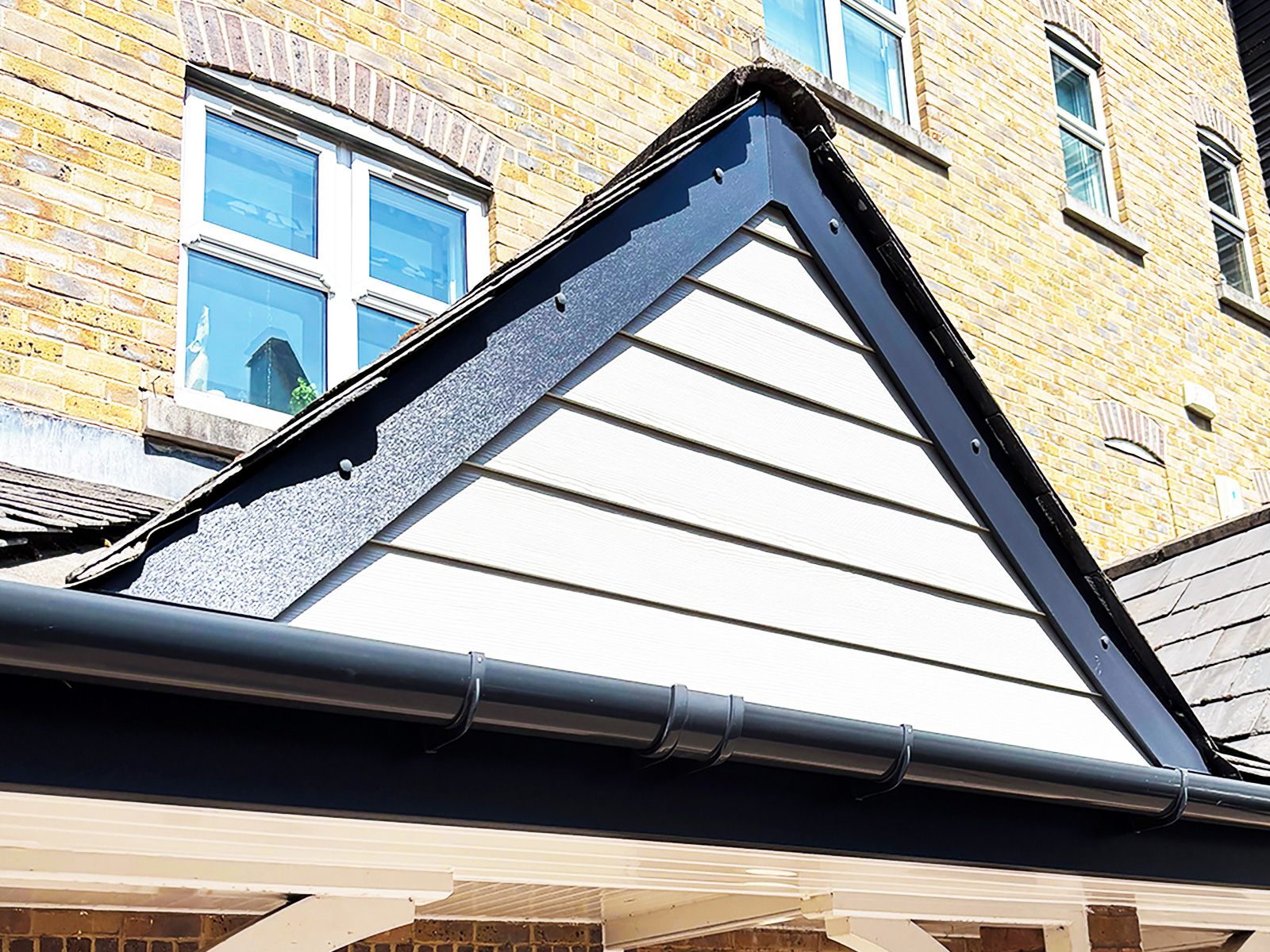
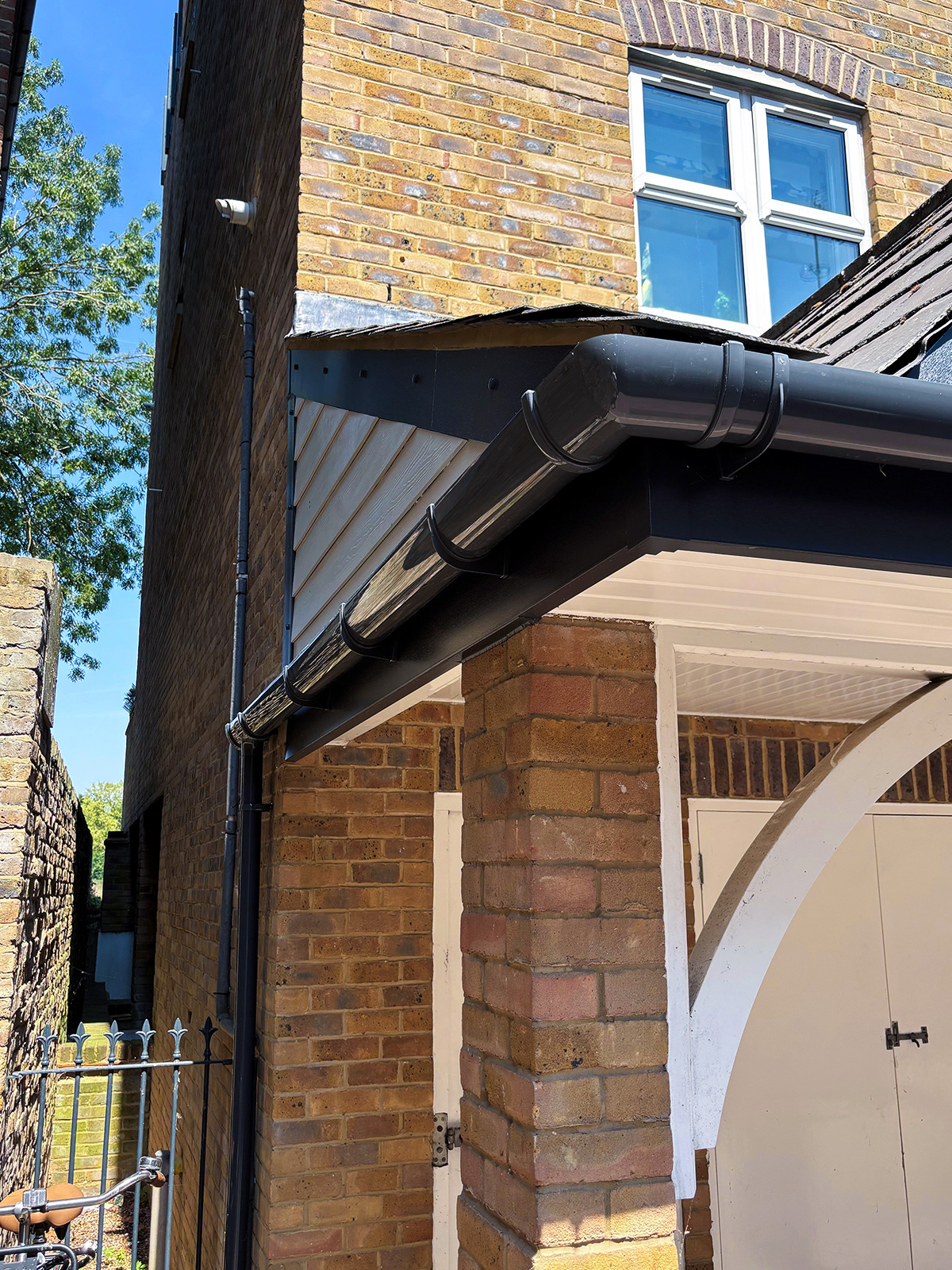
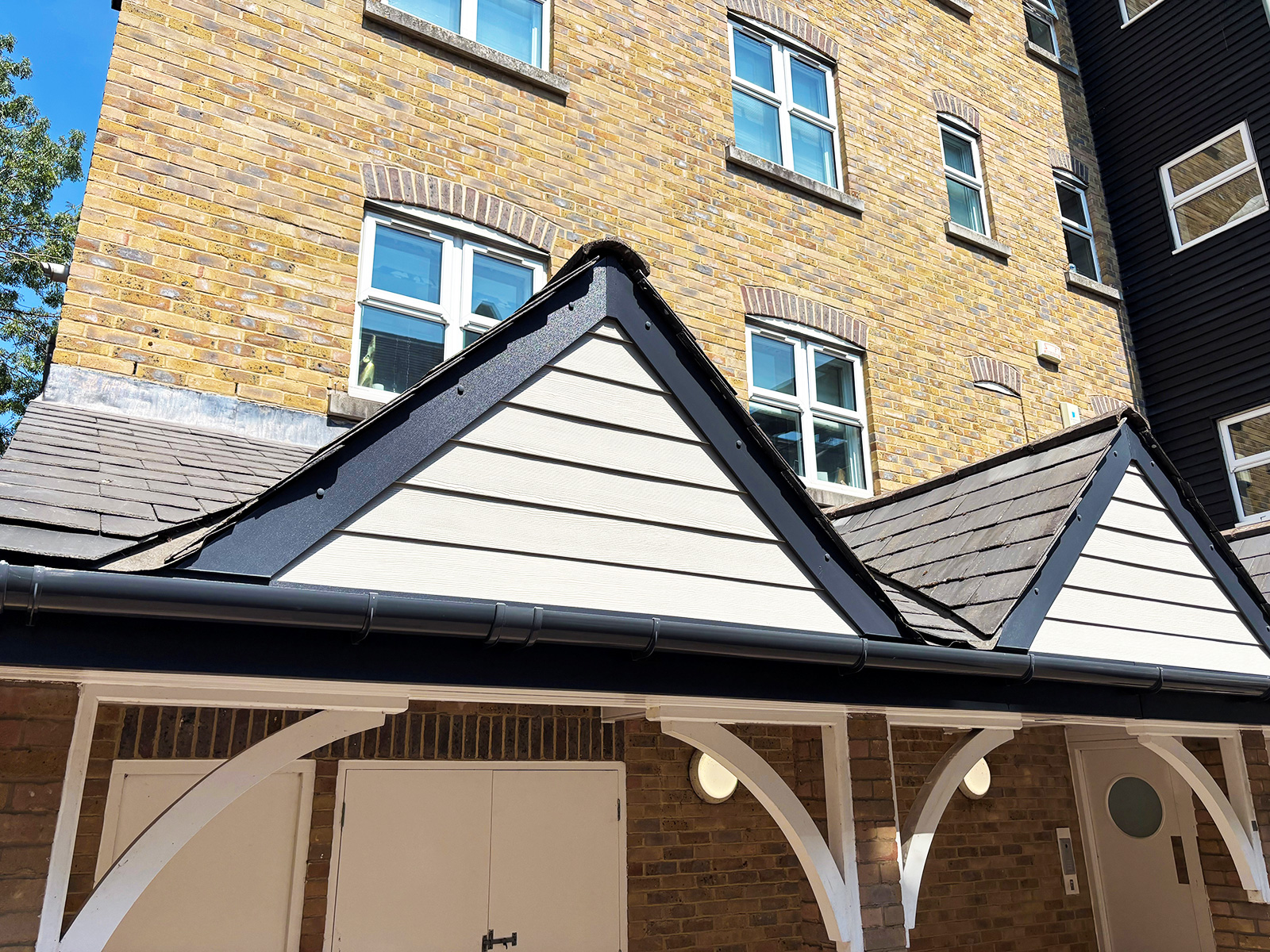
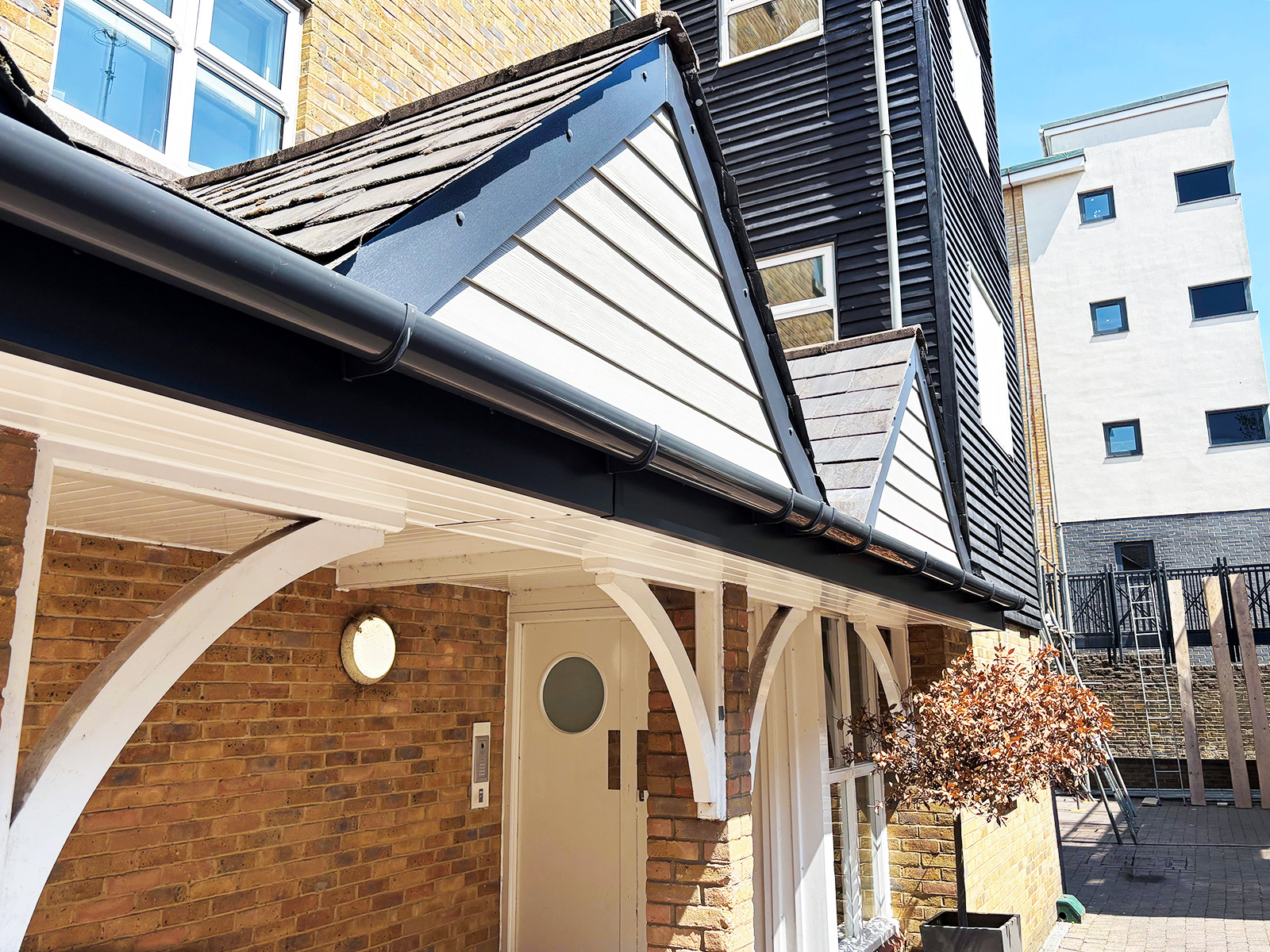
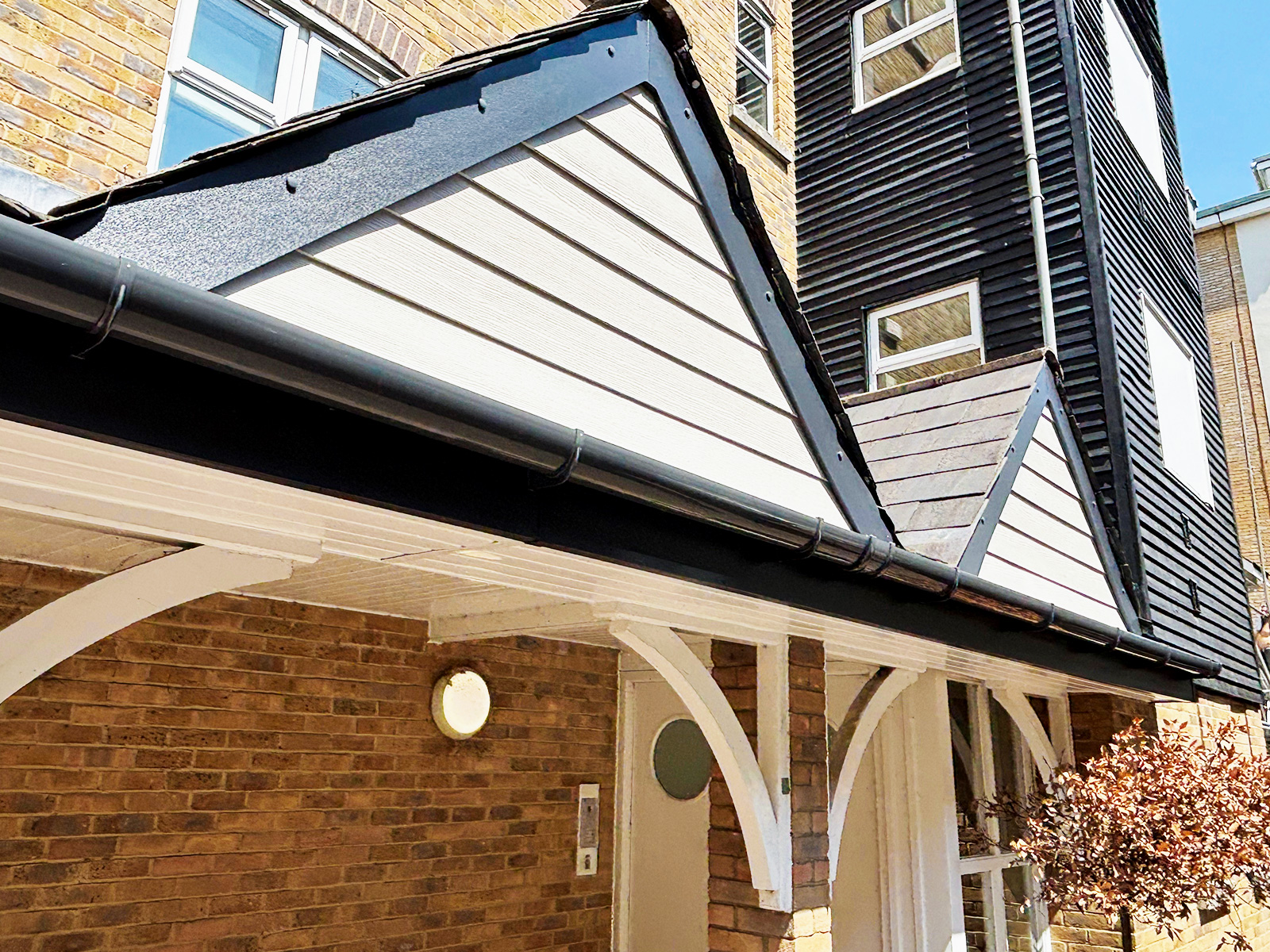
Stunning transformation of tired door canopy with James Hardie cladding
The gentle curve of the River Thames around Richmond upon Thames has seen many changes over the years. Not so much the river itself but the buildings alongside, some of which have been repurposed from industrial to domestic use.
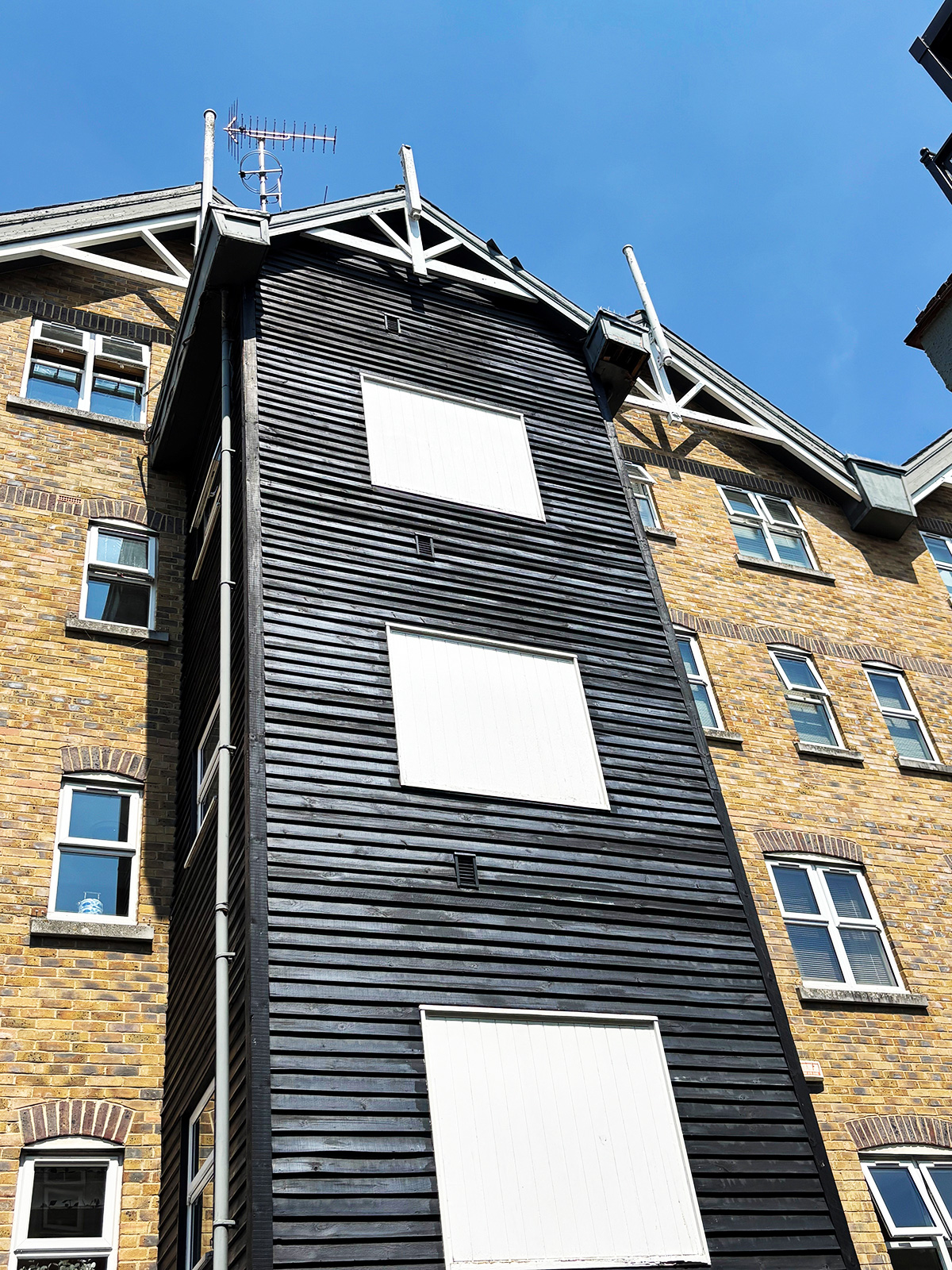
Summit Cladding has been working at one such building – a former warehouse converted into homes, which still retains the distinctive design that hints at a previous life serving London’s river traffic.
We were contacted by the building management to see if we could help fix a leaking roof and side panels and we were more than happy to offer our advice and expertise, based on years of experience with this kind of problem.
Leaks caused rotting timbers
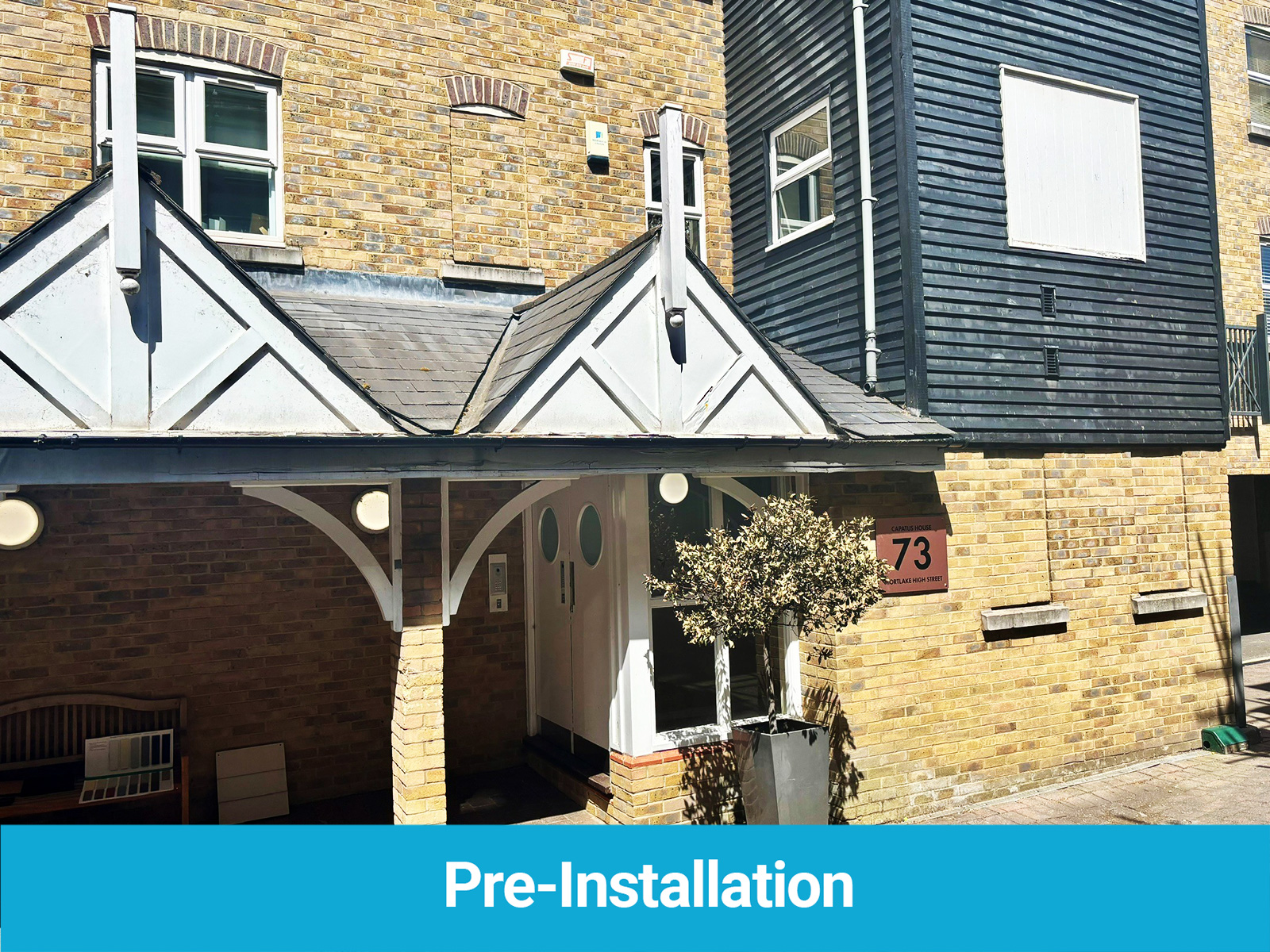
The pitched roof by the entrance doors was built with slate tiles and timber gable ends designed to blend with the historic function of the building. Unfortunately, the infill panels were made of plywood, which is prone to warping when exposed to the weather over time.
When Summit removed these panels the extent of the problem was revealed. Rain had penetrated the panels into the roof cavity and caused the internal rafters to start rotting.
The solution was to remove all the timber fascias and panels and replace the rotten internal rafters with treated timber specially designed for roof structures. At the same time, the gauge of the slates on the roof was adjusted to ensure there would be no leaks from the rain.
James Hardie cladding solution
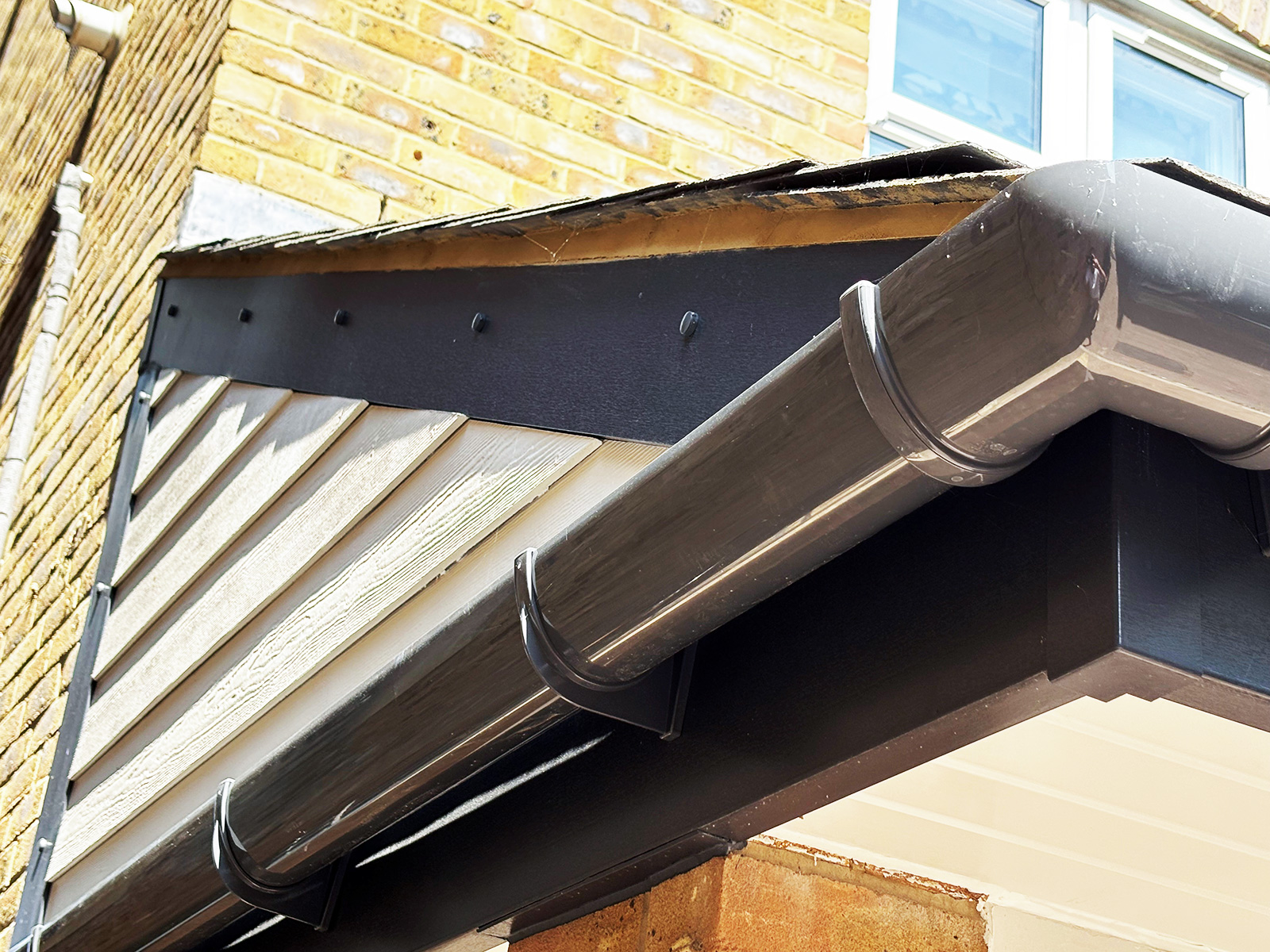
The gable ends were then fitted with a sturdy weatherproof replacement for the plywood panels, in the form of James Hardie cobblestone composite cladding with its own ventilation system.
To complete the installation Summit replaced the original timber fascias with anthracite pvc fascias, which give the appearance of wood but without the maintenance, and also fitted matching deep flow guttering.
Summit Cladding are confident that the new look for this warehouse conversion has guaranteed many years of maintenance-free weatherproofing, while preserving much of the building’s original features.