
Timber cladding restoration in Baldock, Hertfordshire
November 13, 2026 11:13 am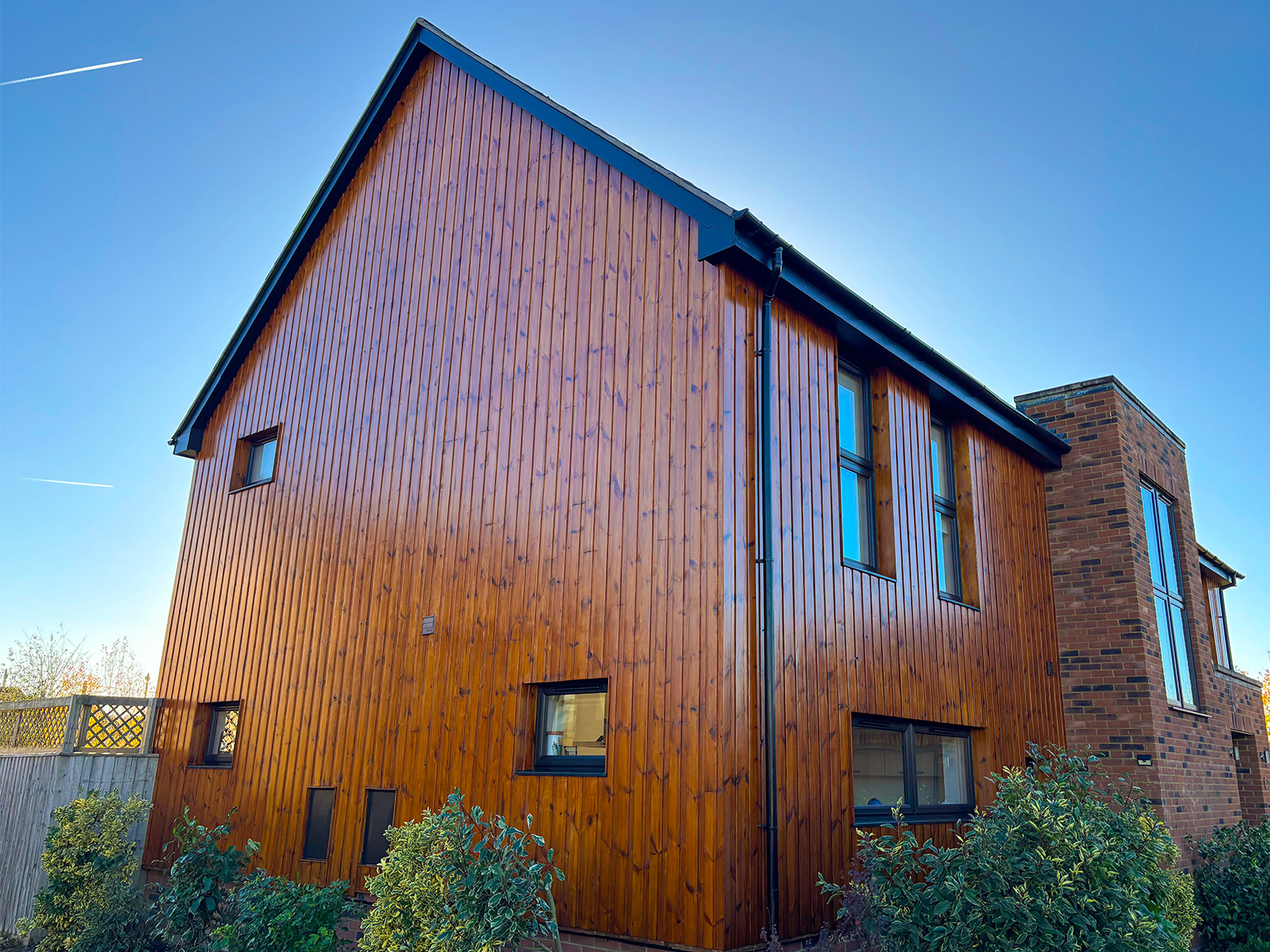
Restoration Gallery
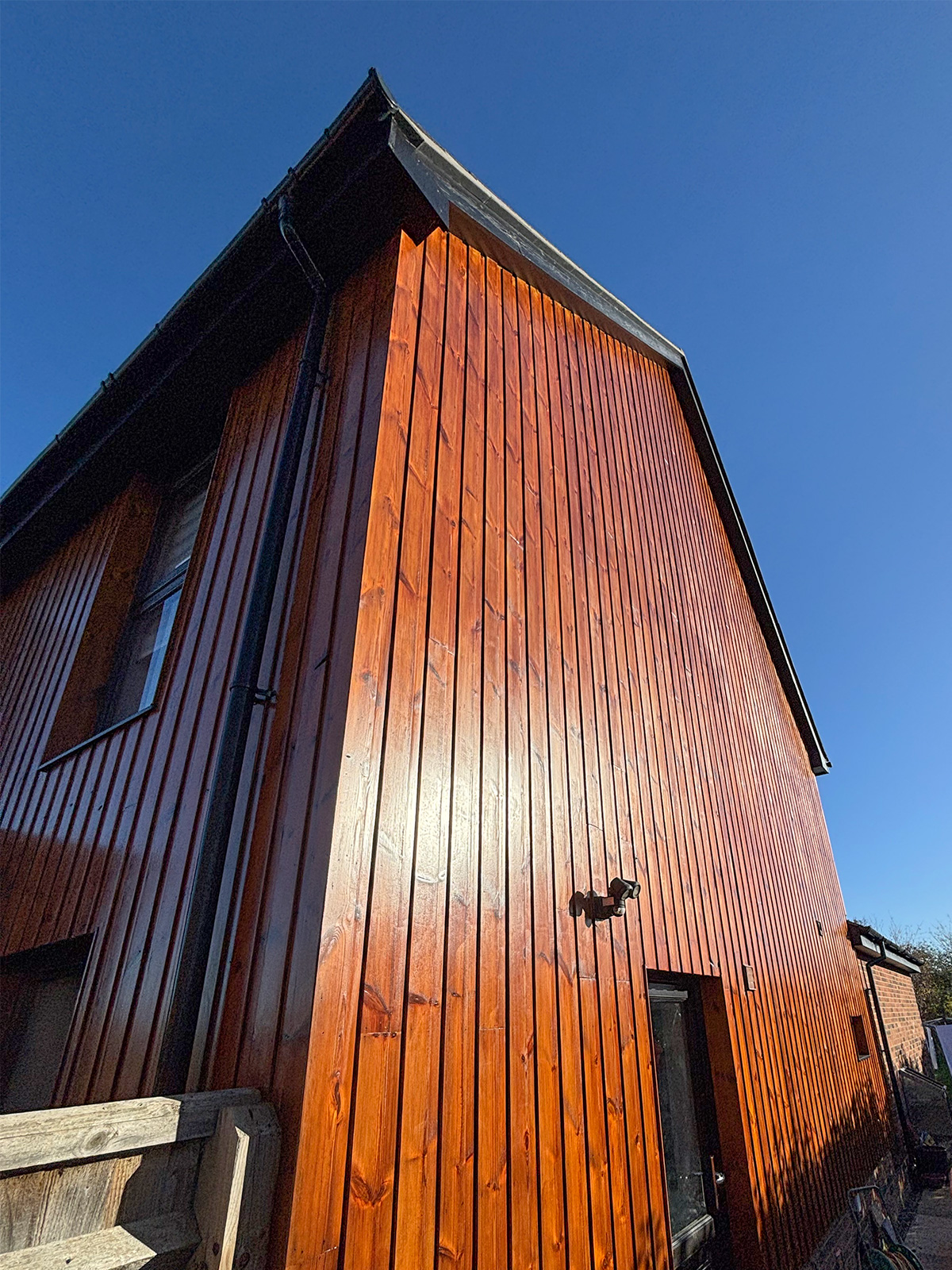
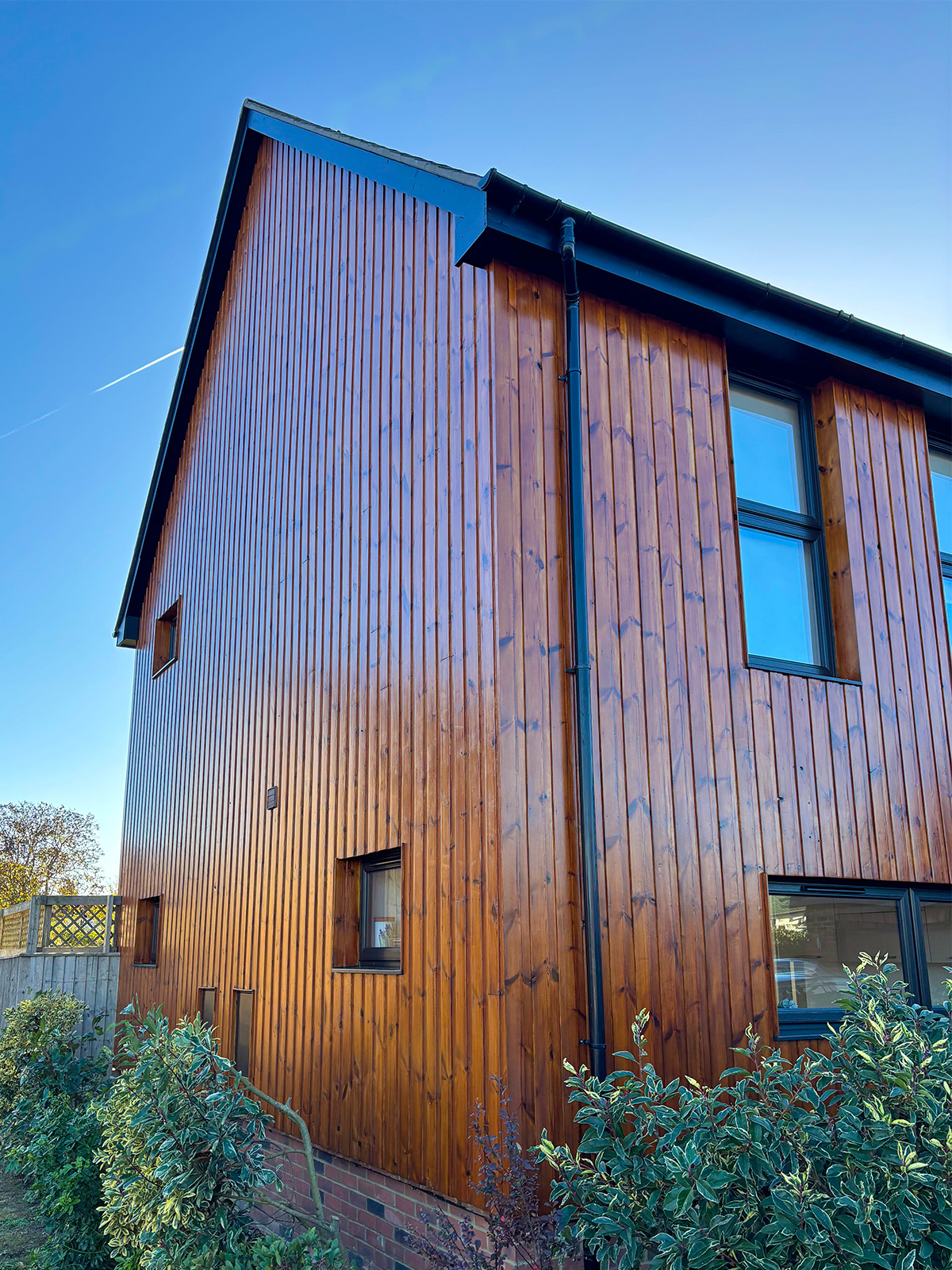
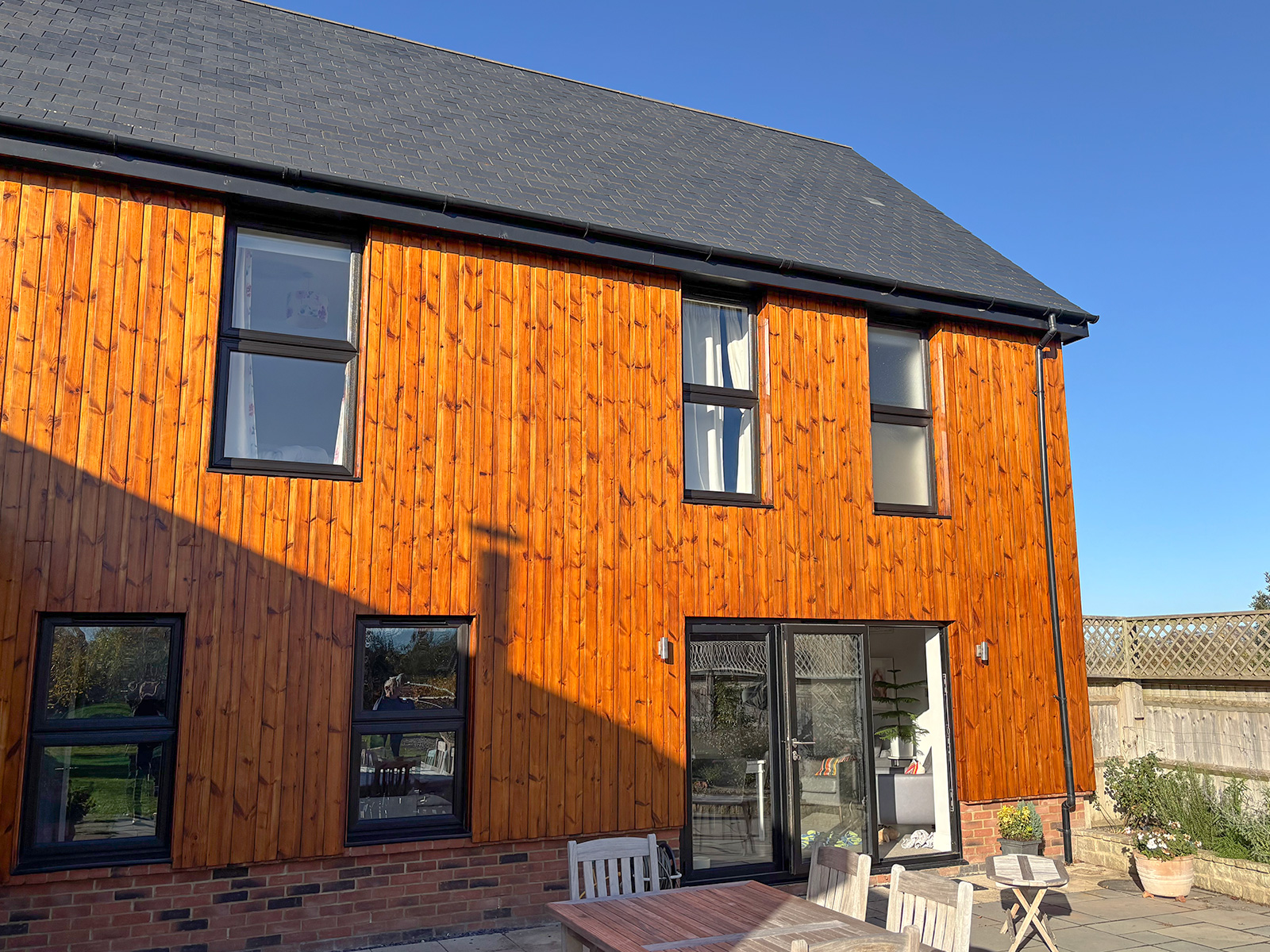
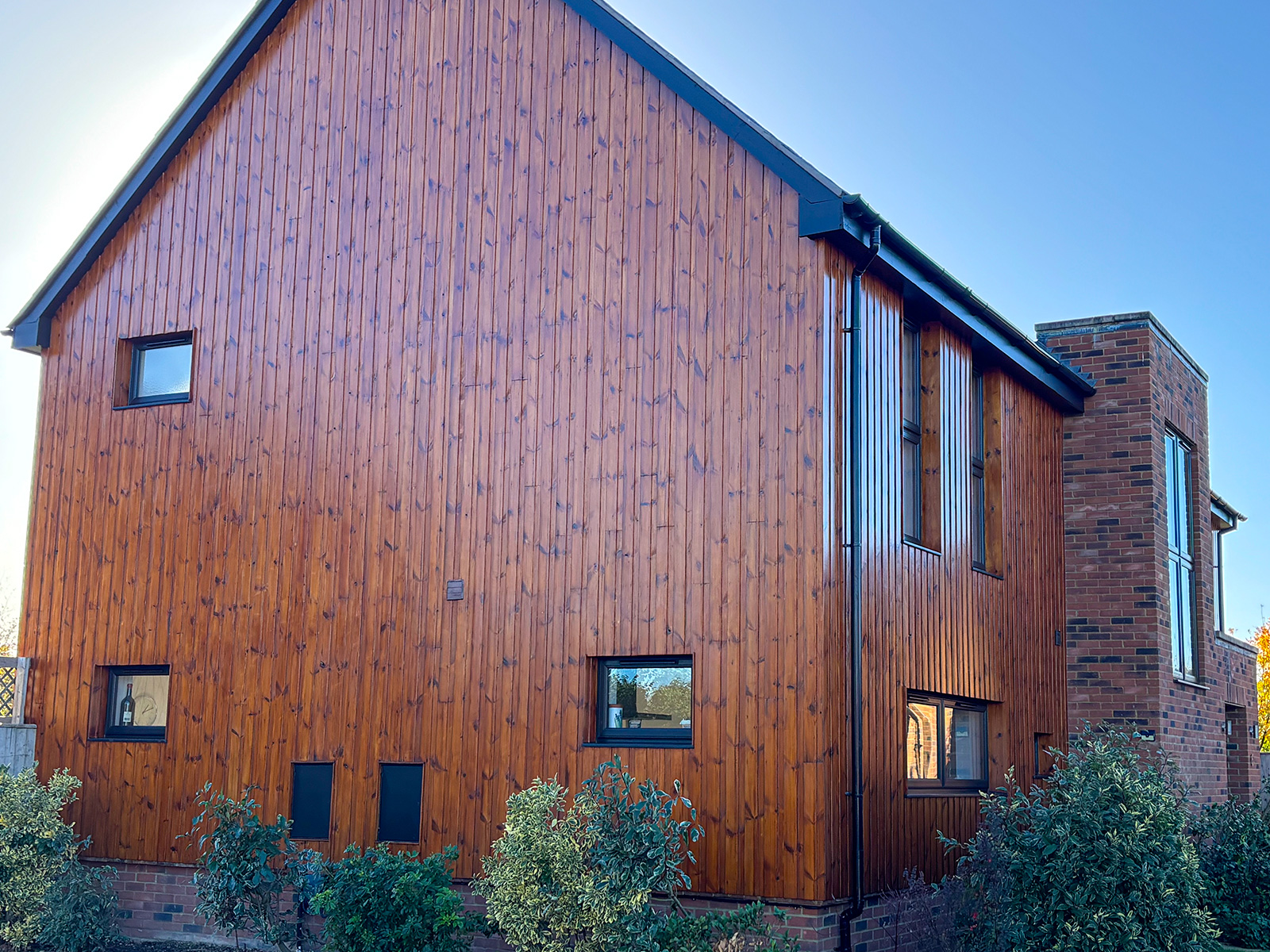
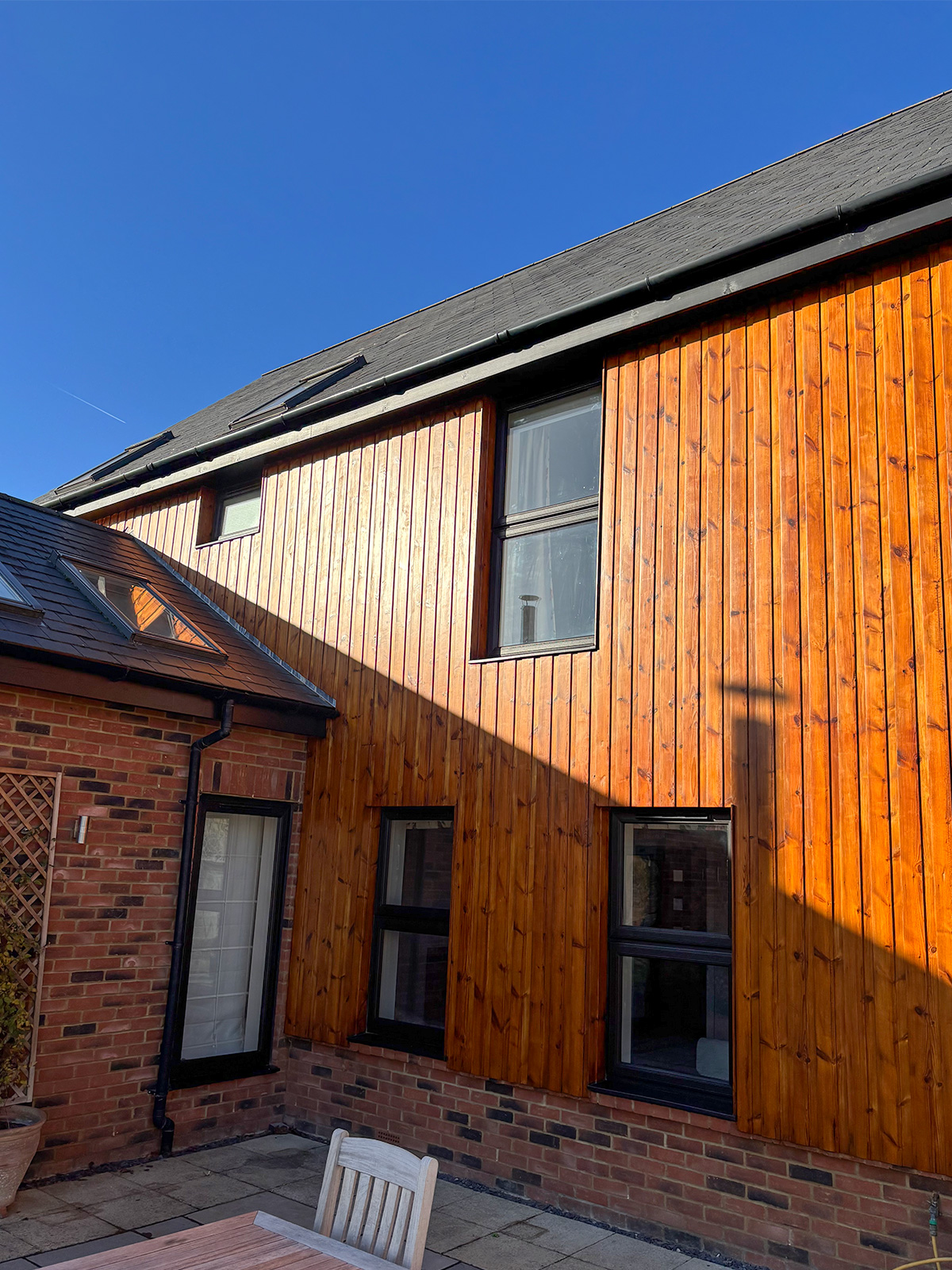
Restoring larch cladding in Hertfordshire
Here at Summit Cladding we always take the greatest care never to rush a job. But sometimes a task becomes what might be described as a “labour of love” that takes many weeks to complete – like this one.
We travelled to the historic market town of Baldock in Hertfordshire, where the owner of this attractive architect-designed property had a bit of a problem. In fact, his was one of six similar homes, built only about 10 years ago, which were all showing signs of the same problem.
The houses were clad with vertical timber boards known as thermally modified larch. This is wood that has been heated to a controlled temperature, a process which changes the structure of the timber to prevent water absorption and rotting.
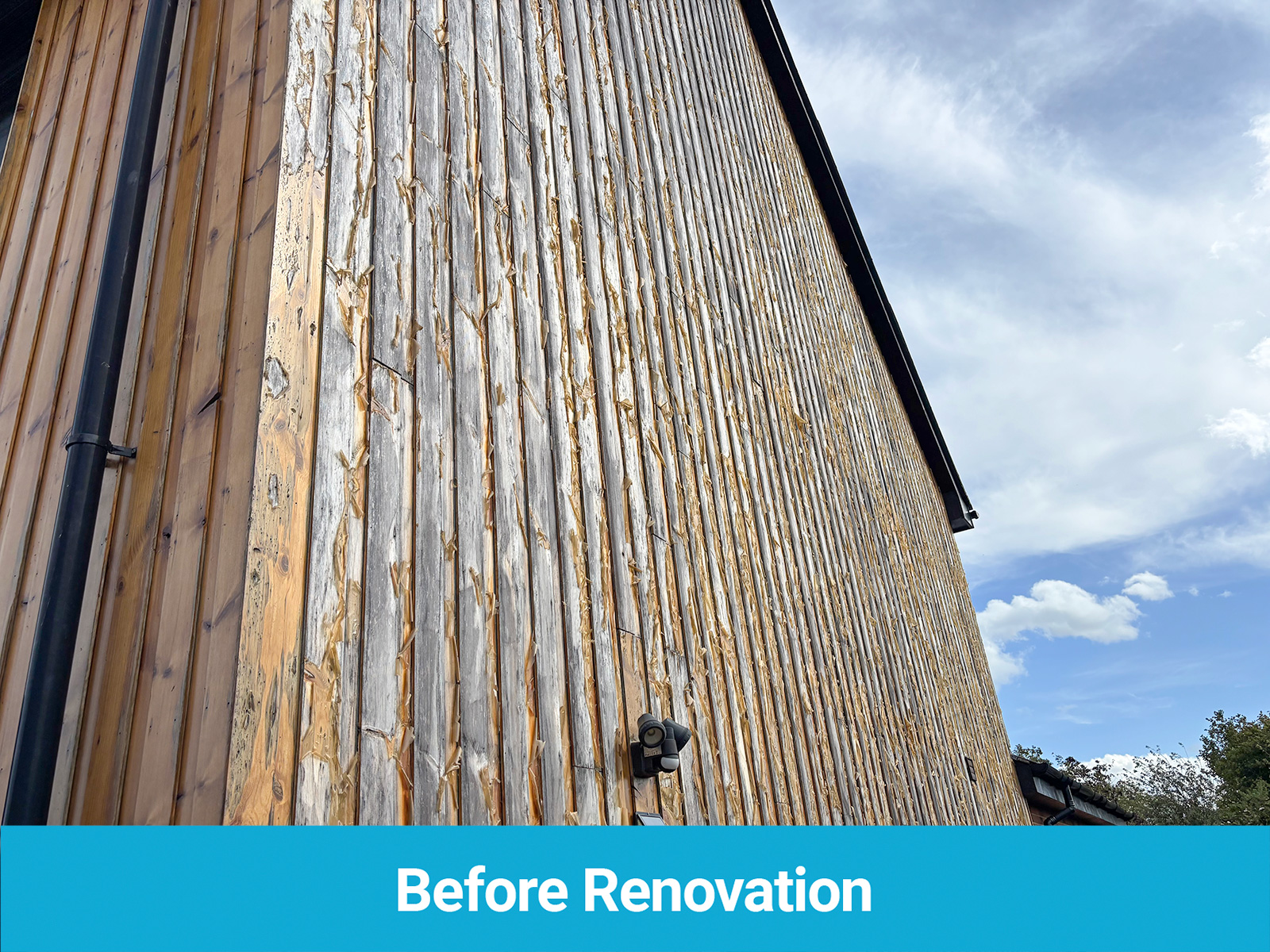
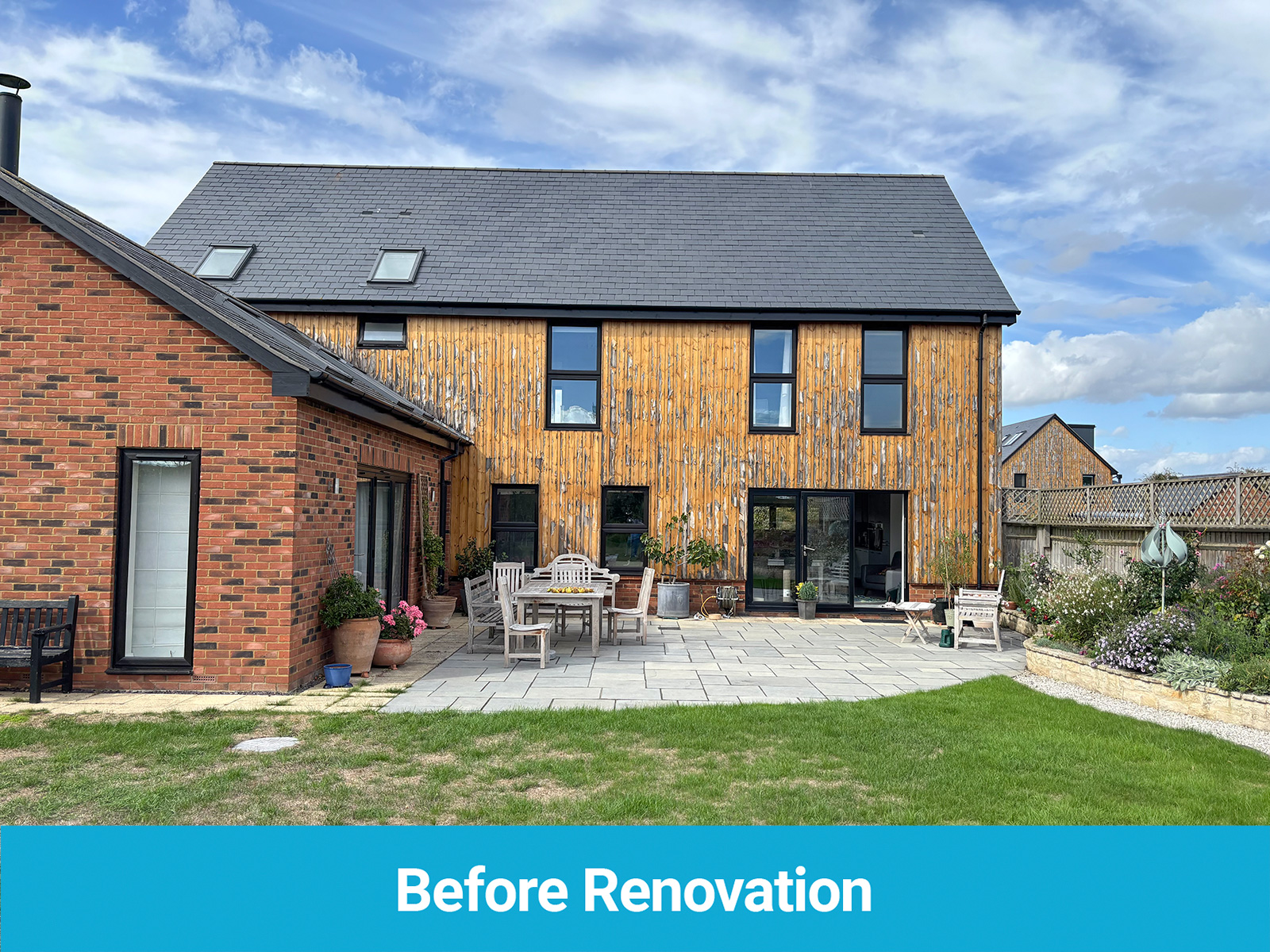
Timber suffering from “sunburn”
However, the problem arose because the Sadolin treatment applied to the cladding had started to flake away due to exposure to the sun – a bit like your peeling skin after too much sunbathing! Every one of the other houses in the small close had defective timber on their south-facing walls.
Our client had initially considered stripping the timber off the walls and replacing it with a composite material, which is what we specialise in, after 35 years in the business. There is certainly a huge range of composite cladding available, in a wide variety of colours, with the advantage of a long, maintenance-free life.
But we are equally happy installing timber cladding, whether it’s oak, red cedar or larch, to name only three. Timber comes supplied in different grades, more expensive if you want fewer knots in the wood, and up to four metres in length if you want to avoid too many joins.
Restoration the best option
It meant that our client had many options available, but there was one more choice and that was to restore the timber cladding already fitted. This is what we advised and which our client agreed to. The wood was sound, so the first task was to strip it back to its natural state before applying a specialist oil that would be absorbed into the timber.
This was no easy task as some of the Sadolin treatment was so thick that it took five coats of specialist remover to get it back to raw timber. After that, all the wood had to be rubbed down with different grades of sander to remove the staining, followed by a coat of Osmo wood preserver to stop any more stains developing.
Finally, when we were certain that the timber surfaces were fully prepared, we applied Osmo light oak oil stain, containing UV-protective pigments to stop the wood turning grey. This was, indeed, a labour-intensive operation that took several weeks to complete, but the evidence is in the before-and-after pictures and our client was delighted with the result.
Categorised in: Timber Cladding
This post was written by Summit Cladding
Comments are closed here.